I've had an eventful morning, to say the least. While working out, I read my Time Magazine, which contained a short sidebar column about a new book, Not Quite What I Was Planning. In this book, people sum up their life story in 6 words. My favorite that Time excerpted was Joan River's quote, "Liars, hysterectomy didn't improve sex life!"
Being the good little blogger I am, I thought: What a great concept! This would make an interesting post. So, I started thinking about what my 6 words would be. Visions of my six word sentences drifted in and out of my head while I finished my push-ups. Even while I was making my breakfast of a cinnamon raisin bagel, I was still pondering the six words.
Until the knife slipped and a flap of skin opened on my left thumb tip. Then, of course, language left me. I went to the bathroom, washed off the cut -- still blooming with blood, and called my husband to tell him I was going to the clinic. Luckily, the clinic is two blocks from my house (yay city living), and the doctor stitched me up within an hour.
The nurses and doctor laughed at me/with me when I told them that I had worked at a bagel shop during college. This was also the summer that I had the worst accident record at the bagel shop, and got stitches on my thumb, during my vacation at Winnipeg Folk Festival when cutting an apple. (The cut was so deep I saw what fat looked like when it is inside your body. Kind of like cottage cheese.) It was then, in that moment of giggling, that I came to my six words, which sum up my life:
Some stitches, not too many scars.
So what are your six words? And how has your morning been?
Monday, February 11, 2008
In Six Words
Posted by Jessica at 10:17 AM 7 comments
Labels: accidents, bibliophilia, meme
Saturday, November 17, 2007
Meme Rogers
…deb, from Stoney Moss, kindly encouraged us nanabooboo burnouts to try out the meme she just posted. The directions are simple, describe three things that I thing good writing should be. Since it was either this, or writing about shopping for clothes at the Fall of America, I’m going with the meme.
I think most importantly, good writing should be honest. I don’t necessarily mean in the details, like I was wearing a red shirt when this event happened, but in the authenticity of the emotion. In my own writing, I can tell when I’m skirting an issue, disguising my feelings on a subject, or using flashy craft to distract myself from actually saying something true. For me, it’s really hard to be honest in writing because you have to open you have to become vulnerable, which feels, well, vulnerable.
Perhaps good writing should have a balance between being layered and being transparent. Maybe being transparently layered? I know this doesn’t make sense, so let me try to explain it. When reading, I love that experience of realizing that the writer is cocooning you the story (fiction) or image (poetry). You feel yourself surrounded by the completeness and complexity of the writing. Yet, at the same time, it seems effortless. You think to yourself, why didn’t I do that? It’s clear that is the direction this story or image was always going, but you were so involved, that you didn’t see it coming.
Last, I think the writing should be not boring. It doesn’t necessarily have an interesting topic, but the writer should be invested enough in the topic to make it interesting. I guess what I’m stretching for here is passion. The writer should have passion for their material and should imbue the writing with that passion.
And it shouldn’t suck. Wait that’s four. I‘ll save that one for another meme.
Posted by Jessica at 8:11 PM 0 comments
Wednesday, November 14, 2007
The School Marm Returns...in a Meme!
Jo, from A Broad's Thoughts From Home, just tagged me in this meme: list at least four things you think a beginning poet should attend to and four mistakes you think a poet should avoid. Although its been over a month since I last taught (ah freedom!), I'll put the teacher hat on and see what I can do with it. Please excuse any hectoring on my part -- I just sat through an hour and a half long meeting, and I'm feeling loopy!
4 Things a Beginning Poet Should Attend To
1) Read other people's poetry besides your own.
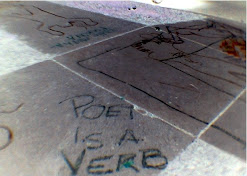
I kind of already covered this in my last poet=verb installment, and in my rampant and obsessive posts about books, but I think that it is vital that all writers read. How else can you know what has come before you and what you can contribute to the dialogue of language?
This is especially true in poetry. In the past two hundred years, there have been scores of stylistic and ideological movements in poetry. By reading those people you like, and the people they liked, and so forth, you are tracing your literary heritage and finding your place in the poetry world.
2) Support small presses, small magazines, independent bookstores and other venues for struggling poets.
From a business standpoint, if you make a product, you should buy similar products to see how your product compares and to support the economy. From an ideological standpoint, it is necessary to preserve the last vestiges of free expression we have in the literary world. Any way that you look at it, you need to support the community that will support you.
3) Learn about form and poetic technique, then use them.
I think it's really important for poets to focus on language. I'm going to sound arch and conservative here, but I think that the reason people become poets is because poets use language differently than prose writers. There is a specific attention to detail, sound, rhythm, and diction that can only be achieved through technique. (I'm talking about the nerdy word stuff like line breaks, enjambment, alliteration, assonance, consonance, rhyme, meter, etc.) Poetry comes from the same root as music and so poetry should sound musical.
Also, from a meaning standpoint, when you are forced to conform to a specific form, you push your language and thought in new ways and surprising ideas erupt because of that struggle. I think free verse is certainly valuable, but your free verse can become informed by poetic techniques if you stretch yourself with forms for awhile.
4) Don't stop writing when it gets too hard.
There aren't a lot of benefits to being a poet. You're not going to make a ton of money, nor are you going to become wildly famous. Oprah has enough friends that are poets (okay onethat I know of) and David Letterman will not invite you on his show. That's a fact of a poet's life. But there are rewards to committing yourself to an artistic practice without external rewards, such as the intrinsic value of documenting your thoughts and feelings for posterity and the clarity of mind that comes with interaction with language.
4 Mistakes a Beginning Poet Should Avoid
Other than the opposite of the above? Boy, this is hard. I already sound like the mean English teacher, but I'll sally forth.
1) Use only abstract ideas in your poems.
When my students would show me their early attempts at poetry, it was hard for me to critique. It was hard because it was emotionally earnest and heartfelt, but it used cliched language or the author told me what he or she meant in the poem. So rather than describing sadness in a concrete, physical, and fresh way, they told me how sad they were and how their sadness was as fathomless as the ocean. (This is not a direct quote of any specific poem I've read by a student.) Now, I didn't want squelch any future interest in poetry or hurt someone after they revealed to me a deep part of their soul. So I had to gently encourage them to show me how they felt, rather than tell me. I would strongly urge a beginning poet towards using one controlling metaphor, known as a conceit, for a poem rather than using simile in a single line.
2) Try to publish too early.
I'm kind of getting back to the external reward thing, and publishing is a huge external reward, but you should workshop and refine poetry before sending it out. As a beginning poet (I think I still am by the way, I just have spent more time beginning), I've sent out poems to editors, only to have them returned with grammar corrections or to be told that it is "almost a poem, if I work on it." It was only in grad school that I really acquainted myself with revision. And I'm still not 100% comfortable with it, but I can recognize when a poem isn't done.
3)Worry that someone else has already said it.
There's been hundreds of years of poetry, in every culture and every time period. Honestly, it's been said before. But you haven't said it, and your perspective has value. Just make sure that you are expressing things the way you would say it, not the way you are expected to say it.
4) Write alone without any help, community, support system, or classes.
I've written alone and I've written with community, and I feel that community is better. While it is scary to open your work up to critique, this is how you grow as a writer. Get involved with online writing communities, free/sliding scale writing classes, or God forbid an English degree. Become acquainted with like minded people who know the ups and downs of the creative process and bitch with them. Or celebrate with them. Or learn from them. Writing is solitary enough as it stands.
Whew! I just felt like I put my hair in a bun, grabbed a ruler, and forced everyone to memorize "The Wasteland" for a final project.
Who should I tag? I think anyone who wants to can participate, leave me a link if you do. You're all tagged!
Posted by Jessica at 9:01 PM 3 comments